Image: U.S. Army (Public Domain)
AH-64 Apache
Designation: AH-64A/D/E Apache
Why it matters
The Apache is the world's most lethal attack helicopter. In Desert Storm, Apaches fired the opening shots of the air campaign, destroying Iraqi radar sites to create a corridor for strike aircraft.
The Longbow radar-equipped variants can detect, classify, and prioritize 128 targets simultaneously. No other helicopter combines the sensors, weapons, and survivability of the Apache. It has redefined what rotary-wing aircraft can do on the battlefield.
Specifications
| Max Speed | 182 mph |
|---|---|
| Range | 300 miles |
| Service Ceiling | 21,000 ft |
| Engine | 2x General Electric T700-GE-701D turboshafts |
| Power/Thrust | 1,890 shp each |
| Length | 58 ft 3 in |
| Crew | 2 |
| Production | 2,400+ built |
| First Flight | 1975-09-30 |
| Service Dates | 1986-present |
Armament
- • M230 30mm chain gun (1,200 rounds)
- • AGM-114 Hellfire missiles (up to 16)
- • Hydra 70 rocket pods
- • AIM-92 Stinger AAMs
Notable Features
- Tandem cockpit with pilot in rear
- Target Acquisition Designation Sight (TADS)
- Pilot Night Vision System (PNVS)
- Longbow millimeter-wave radar (D/E models)
- Crashworthy structure
Patina notes
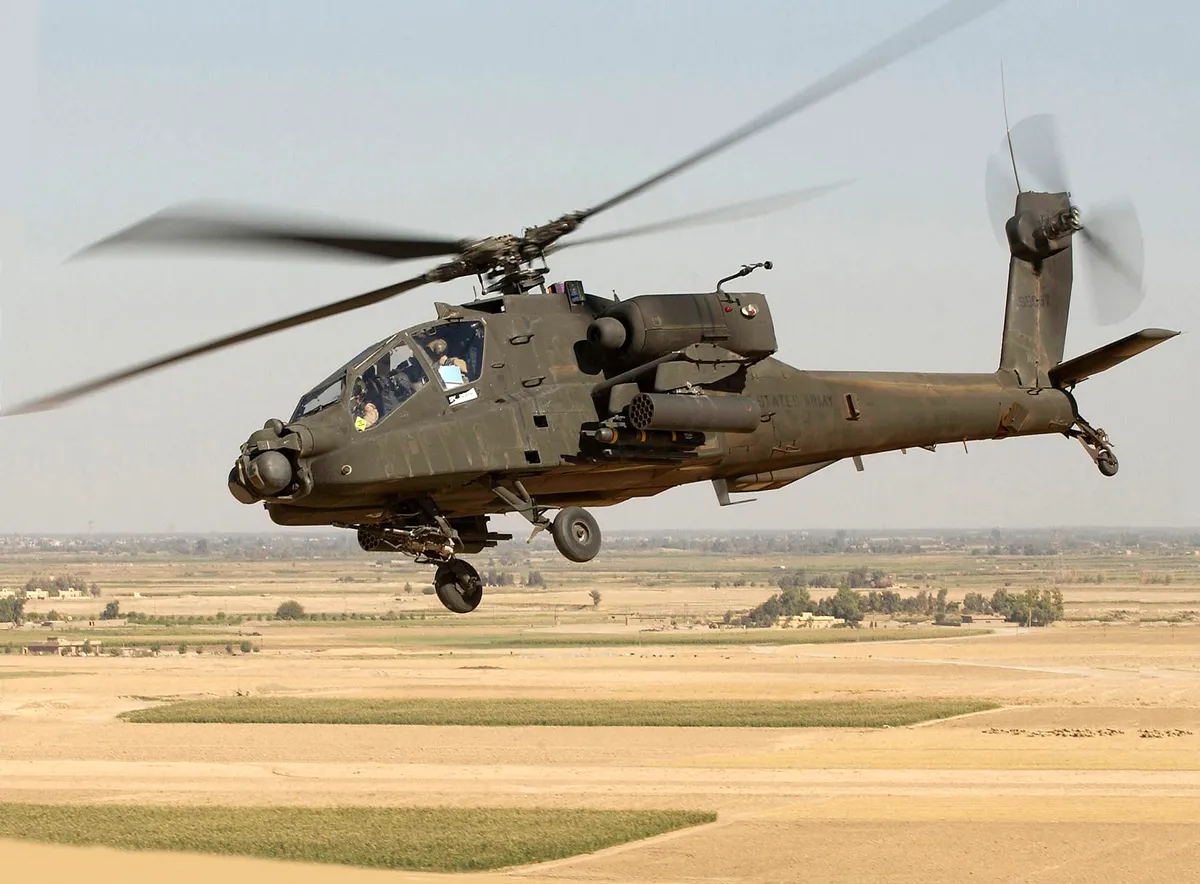
Apaches in combat zones develop a distinctive weathered look. The matte finish absorbs rather than reflects light. Exhaust staining around the engine cowlings.
Hellfire rail scratches from countless weapon loads. The chain gun housing shows the wear of rounds fired. These machines aren't polished — they're tools kept sharp for the job.
Preservation reality
Like the Black Hawk, the Apache is still in active service and being upgraded rather than retired. Early AH-64A models have begun appearing in museums.
The type will remain in service well into the 2040s, so preservation is a future concern. When they do retire, the Apache's combat record will make it a prized museum piece.
Where to see one
- • U.S. Army Aviation Museum (Fort Novosel)
- • Pima Air & Space Museum
- • National Museum of the United States Army
Preservation organizations
- • Army Aviation Association of America
Sources
- Boeing AH-64 Apache (2026-02-04)