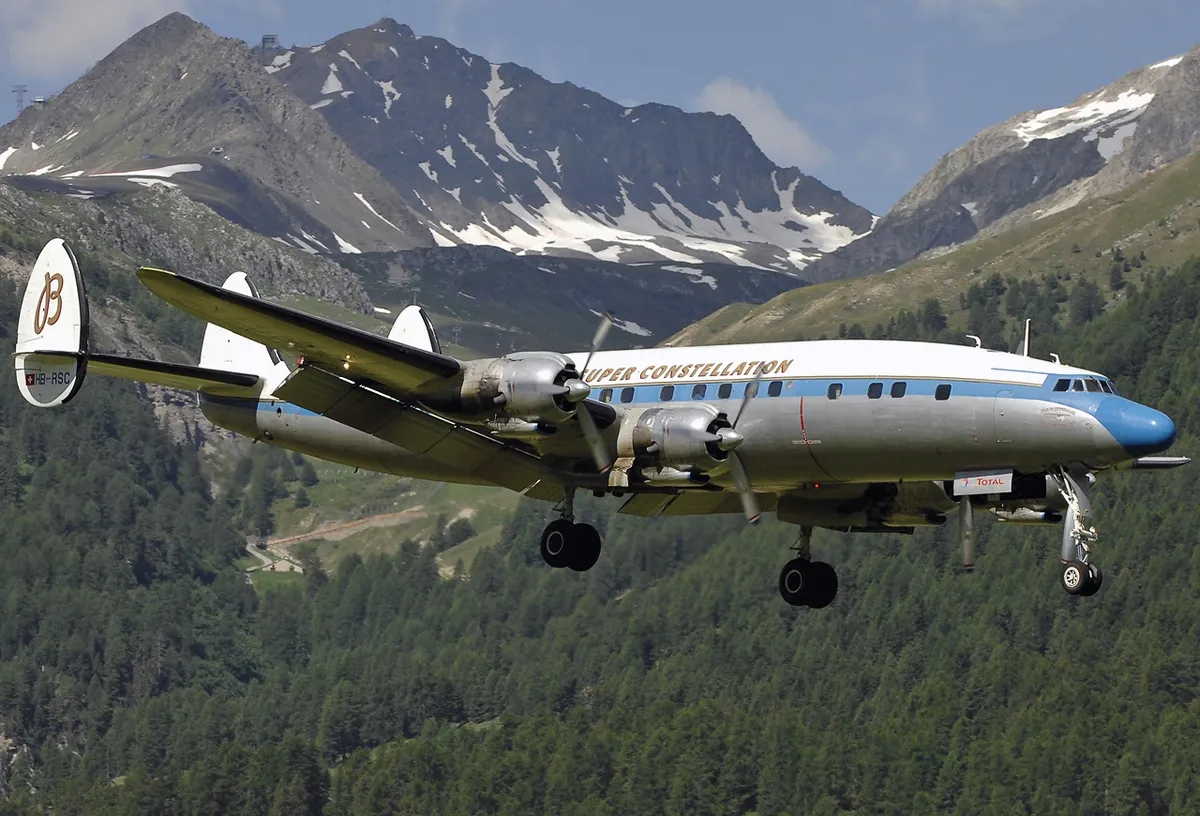
Image: Wikimedia Commons / Dmitry Karpezo (CC BY-SA 4.0)
Lockheed Constellation
Designation: L-1049 Super Constellation
Why it matters
The Constellation was the most beautiful airliner ever built. That triple tail, the graceful dolphin curve of the fuselage, the elegant proportions — Howard Hughes demanded perfection and Lockheed delivered.
The 'Connie' made transatlantic travel glamorous. It was the aircraft of movie stars and presidents. Before jets killed the romance of flight, the Constellation was the pinnacle.
Specifications
| Max Speed | 377 mph |
|---|---|
| Range | 5,400 miles |
| Service Ceiling | 24,000 ft |
| Engine | 4x Wright R-3350-DA3 Turbo-Compound radials |
| Power/Thrust | 3,250 hp each |
| Wingspan | 126 ft 2 in |
| Length | 116 ft 2 in |
| Crew | 4 |
| Production | 856 built (all variants) |
| First Flight | 1943-01-09 |
| Service Dates | 1943-1967 |
Notable Features
- Triple tail
- Dolphin-shaped fuselage
- First pressurized transatlantic airliner
- Howard Hughes' design influence
Patina notes
Constellations were complex aircraft that required extensive maintenance, and that shows in survivors. The distinctive compound-curve fuselage panels are challenging to restore.
The triple tail assemblies show stress patterns from decades of use. The R-3350 Turbo-Compound engines were notoriously maintenance-intensive. Every surviving Connie is a labor of love.
Preservation reality
About a dozen Constellations survive, with only two or three capable of flight. The complexity of the R-3350 engines and the challenges of maintaining pressurized fuselages make operation difficult.
The Super Constellation Flyers Association in Switzerland operates one of the few flying examples. Museum pieces require constant attention to prevent deterioration.
Where to see one
- • National Air and Space Museum
- • Pima Air & Space Museum
- • Qantas Founders Museum (Australia)
- • Super Constellation Flyers (Switzerland, flying)
Preservation organizations
- • Super Constellation Flyers Association
- • Historical Aircraft Restoration Society
Sources
- Lockheed Martin History (2026-02-03)