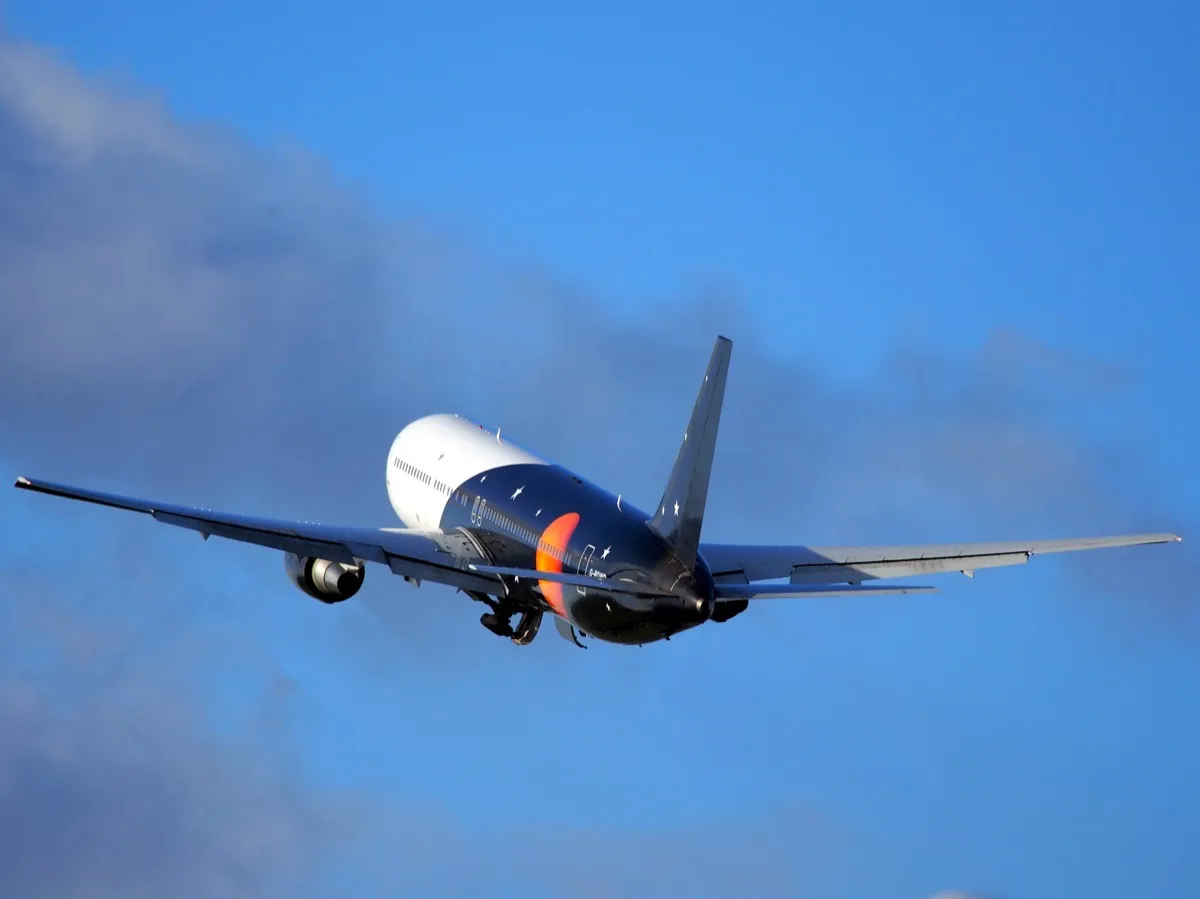
Image: Alf van Beem via Wikimedia Commons (CC0)
Boeing 767
Designation: 767-200/300/400
Why it matters
The 767 quietly killed the four-engine airliner. When it earned ETOPS (Extended-range Twin-engine Operational Performance Standards) certification in 1985, it could fly transatlantic routes that had previously required four engines.
The economics were devastating to the 747, L-1011, and DC-10 — two engines burn less fuel than four. The 767 proved that twin-engine widebodies were safe, reliable, and profitable on long ocean crossings.
Every twin-engine widebody since — the 777, 787, A330, A350 — follows the path the 767 blazed. It's still being produced as the KC-46 military tanker and the 767 Freighter. Not bad for an aircraft that most people can't distinguish from a 757.
What it was like
The 767 was the first widebody airliner designed from the start for a two-person cockpit. The glass cockpit displays — CRT screens replacing traditional steam gauges — were revolutionary in 1982.
Pilots transitioning from classic instrumentation to EFIS displays had to learn to trust the screens. The aircraft handled well and was popular with crews.
The 2-3-2 economy layout made it a passenger favorite too — no one was more than one seat from the aisle. Long-haul 767 crews on ETOPS routes over the Atlantic had the added awareness that they were hours from any divert airport with just two engines.
The procedures and monitoring requirements for oceanic twin-engine operations became a specialized discipline.
The crew
Captain
First generation of widebody captains without a flight engineer backing them up. The automation and glass cockpit took over the systems monitoring role, but the captain had to trust it — and know when not to. ETOPS operations over the North Atlantic meant constant awareness of engine health and diversion options. The 767 was a transitional aircraft: old enough to have real cable controls, new enough to have CRT displays.
First Officer
Working the first glass cockpit in a widebody meant managing information differently. The flight management computer did much of the navigation work, but the copilot still needed to cross-check and verify. On ETOPS routes, the first officer shared the constant monitoring of engine parameters that could mean the difference between a normal crossing and an emergency diversion to Iceland.
Specifications
| Max Speed | 568 mph (Mach 0.86) |
|---|---|
| Range | 6,385 miles (767-300ER) |
| Service Ceiling | 43,100 ft |
| Engine | 2x General Electric CF6-80 / Pratt & Whitney JT9D-7R4 / PW4000 / RR RB211 |
| Power/Thrust | 48,000-63,300 lbf each (varies by variant) |
| Wingspan | 156 ft 1 in (767-300) |
| Length | 180 ft 3 in (767-300) |
| Crew | 2 |
| Production | 1,300+ built (all variants) |
| First Flight | 1981-09-26 |
| Service Dates | 1982-present |
Notable Features
- First widebody with two-crew cockpit (no flight engineer)
- First airliner with glass cockpit EFIS displays
- ETOPS certification enabled twin-engine transatlantic flights
- Versatile: passenger, cargo (767F), military tanker (KC-46)
- 2-3-2 economy seating — no middle-of-the-middle seat
Patina notes
767s in passenger service are showing their age as airlines replace them with 787s and A330neos. The first-generation glass cockpit CRTs look distinctly vintage now — green phosphor screens in an era of LCD displays.
Older 767s in cargo service accumulate the honest wear of freight operations. The fuselage cross-section is distinctive — wider than a narrowbody but notably slimmer than the 747 or 777.
Preservation reality
The 767 is still in production (freighter and KC-46 tanker variants), so it's not yet a preservation subject. Passenger 767s are being retired by major airlines but many continue in cargo and charter service.
The type's significance — first glass cockpit widebody, the aircraft that proved ETOPS — means some will eventually be preserved, but the urgency isn't there yet. Delta, United, and several cargo operators still fly them daily.
Where to see one
- • Still in active airline service worldwide
- • Boeing factory in Everett, WA (production line)
Preservation organizations
- • Boeing
Sources
- Boeing 767 Overview (2026-03-05)