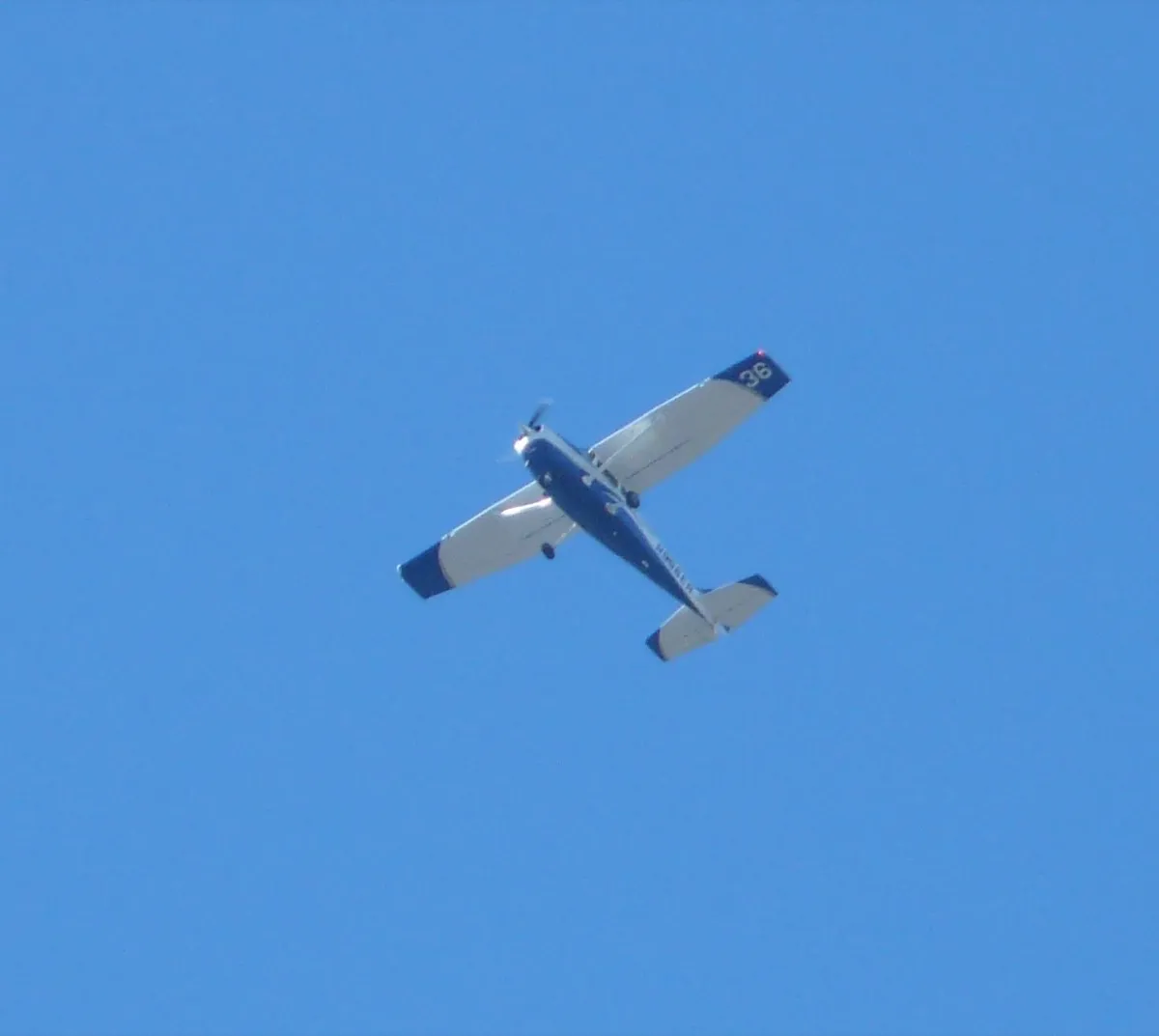
Image: The Bushranger via Wikimedia Commons (CC BY-SA 4.0)
Cessna 172 Skyhawk
Designation: 172S Skyhawk SP
Why it matters
Forty-four thousand. That's how many Cessna 172s have rolled off the line since 1956, making it the most produced aircraft in history by a wide margin.
The 172 is the Honda Civic of aviation: not the fastest, not the sexiest, not the most capable. Just the most trusted. If you hold a pilot's license, you almost certainly learned in one.
If you've ever ridden in a small plane, it was probably a 172. The design is so fundamentally right that Cessna has been building essentially the same airplane for nearly 70 years and nobody's come up with a reason to stop.
In 1958, two guys kept one airborne for 64 days straight just to prove a point. The point was made.
Specifications
| Max Speed | 163 mph |
|---|---|
| Range | 640 miles |
| Service Ceiling | 13,500 ft |
| Engine | 1x Lycoming IO-360-L2A flat-four |
| Power/Thrust | 180 hp |
| Wingspan | 36 ft 1 in |
| Length | 27 ft 2 in |
| Crew | 1 |
| Production | 44,000+ built |
| First Flight | 1955-06-12 |
| Service Dates | 1956-present |
Notable Features
- Most produced aircraft in history
- High-wing tricycle gear configuration
- Endurance record: 64 days airborne (1958-59)
- Still in production after nearly 70 years
Patina notes
A well-used 172 tells its story through the details. The yoke grips are worn to a polish from student hands. The panel has usually been upgraded at least once, creating an archaeological layer cake of 1970s steam gauges and 2010s glass screens.
The high wing's leading edge shows the pitting of countless bugs and rain encounters. Tie-down rings on the wings are scuffed from years on the ramp. The seats carry the permanent impressions of a thousand different pilots, each one sitting slightly differently but all making the same basic mistakes on landing.
Preservation reality
The 172 doesn't need preservation because it never stopped being produced. New ones roll off the Wichita line today. Used examples from every decade since the 1950s are available, with prices ranging from $30,000 for a tired 1960s model to $500,000+ for a new-production Skyhawk SP.
Parts are abundant, mechanics know the type intimately, and the support infrastructure is unmatched in general aviation. This is the one airplane that will never become rare.
Where to see one
- • Literally any general aviation airport in the world
- • Your local flight school
- • EAA AirVenture Oshkosh
- • National Air and Space Museum
- • Cessna factory, Wichita, KS
Preservation organizations
- • Cessna Pilots Association
- • AOPA
- • EAA
Sources
- Cessna 172 - Wikipedia (2026-03-05)
- Textron Aviation - Cessna Skyhawk (2026-03-05)