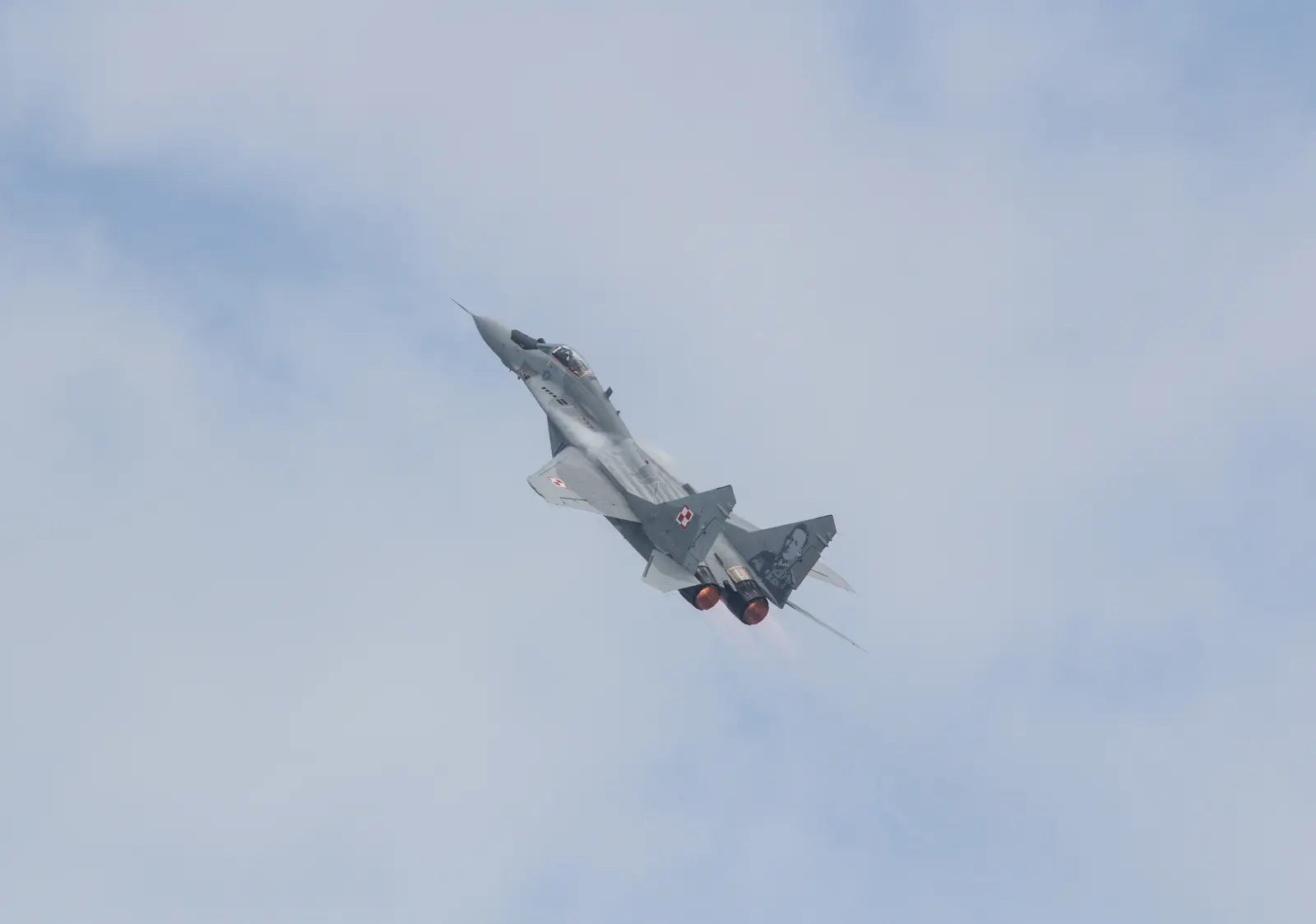
Image: Airwolfhound via Wikimedia Commons (CC BY-SA 2.0)
MiG-29
Designation: MiG-29A/S/M
Why it matters
The MiG-29 was the Soviet answer to the F-15 and F-16 — a twin-engine air superiority fighter designed to meet Western fourth-generation jets head-on.
When the Berlin Wall fell, NATO pilots finally got to fly against real Fulcrums. The verdict: terrifying in a close-range dogfight. The helmet-mounted sight and R-73 missile combination meant a MiG-29 could shoot at you from angles Western fighters couldn't match. The Fulcrum changed how NATO thought about air combat.
What it was like
The Fulcrum is an analog beast with analog charm. Soviet cockpit ergonomics are different from Western standards — instruments are positioned differently, the stick and throttle have different logic.
But the aircraft itself is a superb dogfighter. The twin RD-33 engines are smoky but responsive. The IRST lets you track targets passively without alerting them.
In close combat, the helmet-mounted sight means you can shoot where you look. Western pilots who flew captured examples described the experience as eye-opening.
The crew
Pilot
You sat in a cockpit designed for a different philosophy. Soviet doctrine emphasized ground-controlled intercepts — the controller told you where to go and when to shoot. The aircraft was designed around that concept. But the MiG-29 transcended its doctrine. In a visual-range fight, the IRST, helmet sight, and Archer missiles gave you capabilities no Western fighter matched until the late 1990s. The jet was responsive, powerful, and could do things at high angles of attack that seemed impossible.
Specifications
| Max Speed | Mach 2.25 (1,490 mph) |
|---|---|
| Range | 930 miles |
| Service Ceiling | 59,060 ft |
| Engine | 2x Klimov RD-33 afterburning turbofans |
| Power/Thrust | 18,300 lbf each with afterburner |
| Wingspan | 37 ft 3 in |
| Length | 56 ft 10 in |
| Crew | 1 |
| Production | 1,600+ built |
| First Flight | 1977-10-06 |
| Service Dates | 1983-present |
Armament
- • 1x GSh-30-1 30mm cannon
- • 6x hardpoints
- • R-73 (AA-11 Archer) and R-27 (AA-10 Alamo) missiles
Notable Features
- IRST (infrared search and track) sensor
- Helmet-mounted sight for off-boresight missile shots
- FOD doors (unique intake protection)
- Cobra maneuver capability
Patina notes
Fulcrums wear their smoky engines on their skin — the twin exhaust trails leave distinctive staining along the tail booms and vertical stabilizers. The FOD doors on the intakes (which close during ground operations to prevent foreign object ingestion) are a unique MiG-29 feature that shows wear from hundreds of cycles.
Operational Fulcrums often fly in faded camouflage with weathered national markings.
Preservation reality
The MiG-29 is still in service with dozens of air forces. German reunification brought MiG-29s into NATO hands — the Luftwaffe operated them until 2004, then transferred them to Poland.
Former East German examples are the best-documented Western Fulcrums. Museums have a few, but the MiG-29 remains primarily an operational aircraft. Ukraine has been flying them in combat since 2022.
Where to see one
- • Deutsches Museum (Munich)
- • Polish Aviation Museum (Krakow)
- • Central Air Force Museum (Monino, Russia)
- • Various airshows featuring Polish or Indian MiG-29s
Preservation organizations
- • Various national air force heritage organizations
Sources
- Military Factory MiG-29 (2026-03-05)
- Smithsonian National Air and Space Museum (2026-03-05)