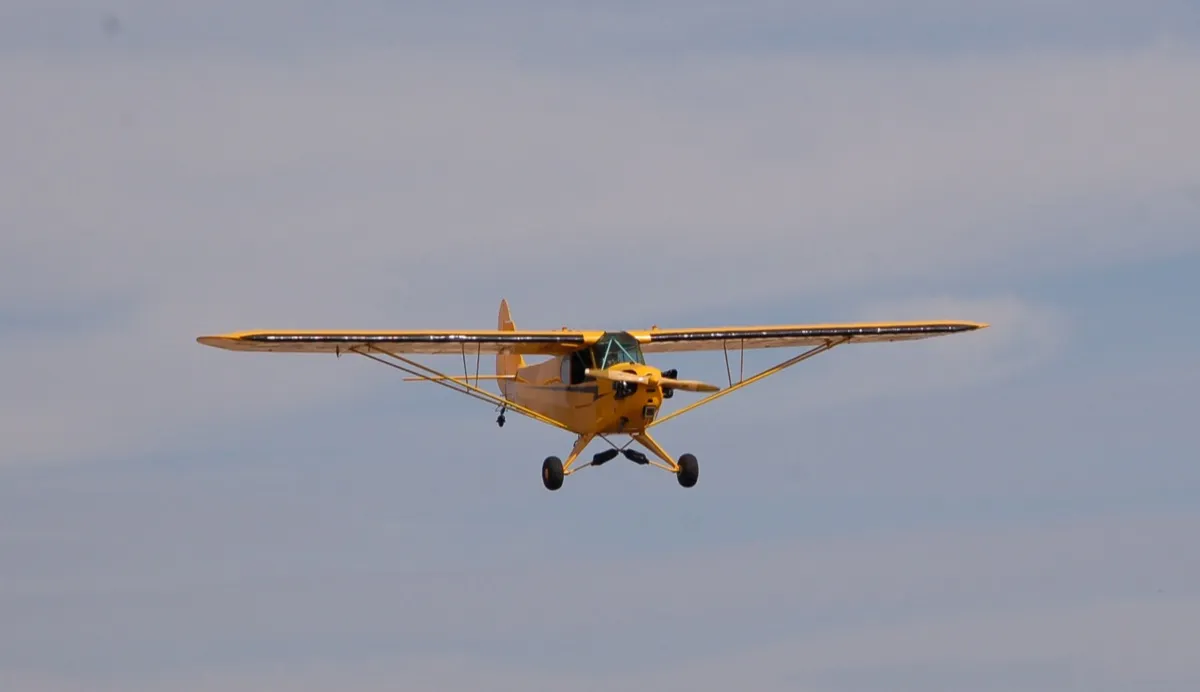
Image: Spartan7W via Wikimedia Commons (CC BY-SA 3.0)
Piper J-3 Cub
Designation: J-3C-65
Why it matters
The J-3 Cub is where American aviation became personal. Before the Cub, flying was for the military, airlines, and barnstormers. The Cub put flying within reach of ordinary people.
Nearly 20,000 were built, and they trained a generation of pilots through the Civilian Pilot Training Program just in time for World War II. The military version, the L-4 Grasshopper, spotted artillery across Europe.
But the Cub's real legacy is simpler than that. It's the airplane that taught America to fly. That yellow silhouette is still the universal symbol for 'small airplane,' and for good reason. There is no more honest flying machine.
Specifications
| Max Speed | 87 mph |
|---|---|
| Range | 220 miles |
| Service Ceiling | 11,500 ft |
| Engine | 1x Continental A-65-8 flat-four |
| Power/Thrust | 65 hp |
| Wingspan | 35 ft 3 in |
| Length | 22 ft 5 in |
| Crew | 2 |
| Production | 19,888 built |
| First Flight | 1938 |
| Service Dates | 1938-present |
Notable Features
- Iconic Cub Yellow paint scheme (Lock Haven Yellow)
- Tandem seating with solo from rear seat
- No electrical system in original configuration
- Hand-propped to start
Patina notes
A good J-3 Cub shows its age the way a favorite leather jacket does. The fabric covering develops a taut, drum-like quality with years of doping. Lock Haven Yellow fades to a particular shade that no fresh paint can replicate.
The wooden propeller (if original) shows the dings of a thousand hand props. The instrument panel is laughably simple: airspeed, altimeter, tach, oil pressure, oil temp.
That's it. That's flying. The control stick is worn smooth where thousands of student hands gripped too tight on their first landings.
Preservation reality
The J-3 Cub is one of the most common antique aircraft still flying. The EAA and Antique Aircraft Association communities keep hundreds airworthy. Fabric recovering is a well-understood craft, Continental A-65 engines are still rebuildable, and the airframe is simple enough that a skilled owner can maintain one in a home shop.
Prices range from project hulks at $15,000 to immaculate restorations north of $100,000. Lock-in at Oshkosh and you'll see dozens parked on the grass.
Where to see one
- • EAA AirVenture Oshkosh (dozens every year)
- • Piper Aviation Museum, Lock Haven, PA
- • Sentimental Journey fly-in
- • Any grass strip in America on a Saturday morning
- • Your local airport almost certainly has one
Preservation organizations
- • Cub Club
- • Antique Aircraft Association
- • EAA
Sources
- Piper J-3 Cub - Wikipedia (2026-03-05)
- Piper Aviation Museum (2026-03-05)