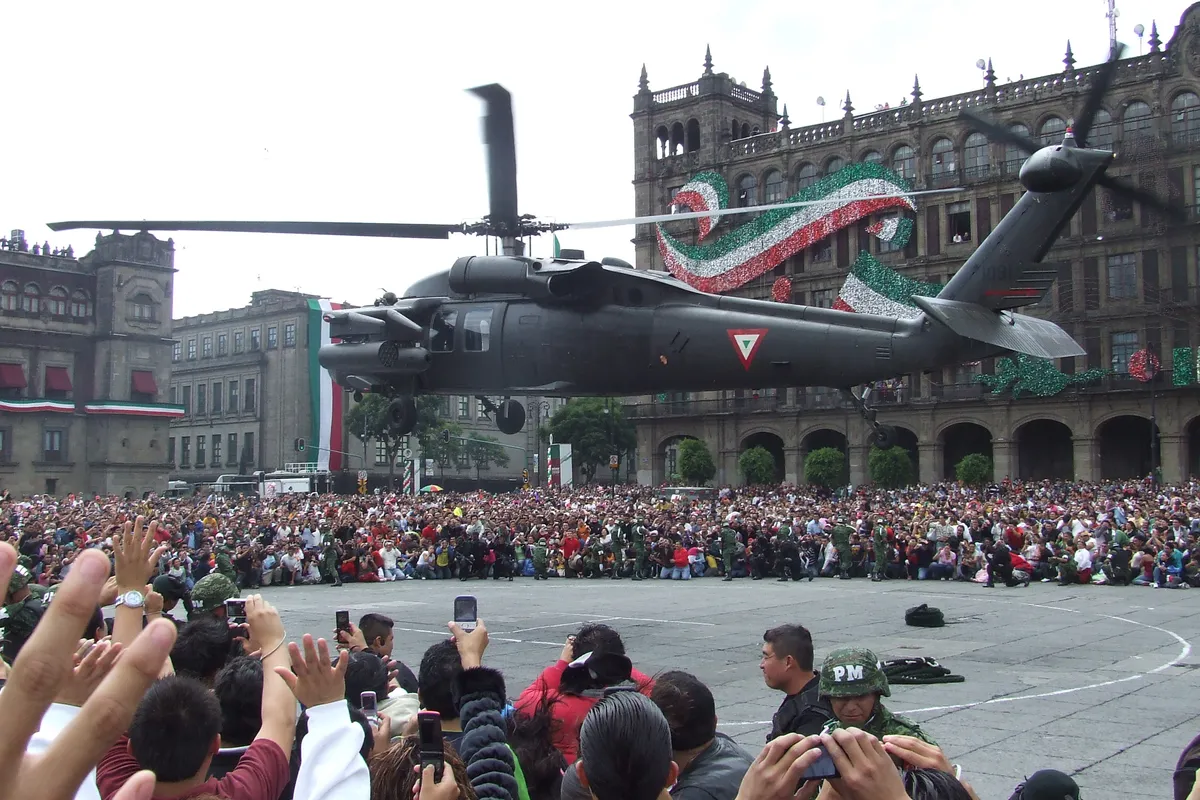
Image: U.S. Army (Public Domain)
UH-60 Black Hawk
Designation: UH-60A/L/M Black Hawk
Why it matters
The Black Hawk replaced the legendary Huey as the U.S. Army's primary utility helicopter. Where the Huey defined Vietnam, the Black Hawk defines every conflict since — from Grenada to Desert Storm to the streets of Mogadishu.
It's faster, carries more, flies higher, and survives more damage than its predecessor. The 'Black Hawk Down' incident in Somalia cemented its place in public consciousness, but thousands of less dramatic missions prove its worth every day.
Specifications
| Max Speed | 183 mph |
|---|---|
| Range | 368 miles |
| Service Ceiling | 19,000 ft |
| Engine | 2x General Electric T700-GE-701C turboshafts |
| Power/Thrust | 1,890 shp each |
| Length | 64 ft 10 in (rotors turning) |
| Crew | 4 |
| Production | 4,000+ built (all variants) |
| First Flight | 1974-10-17 |
| Service Dates | 1979-present |
Notable Features
- Twin turboshaft engines
- 11 combat-equipped troops
- External cargo hook (8,000 lb)
- Crashworthy fuel system
- Ballistic-tolerant main rotor
Patina notes
Combat Black Hawks accumulate the evidence of hard service. Sand erosion on rotor blades from Middle East deployments. Scratches and dents from tight landing zones.
Faded paint from sun exposure. Patches over bullet holes. The crew chiefs take pride in keeping them flying, and the wear patterns tell the story of constant readiness.
Preservation reality
As an active-service aircraft, the Black Hawk isn't yet a preservation subject — it's still the workhorse. Early UH-60A models are beginning to appear in museums as they're retired.
The Army Aviation Museum at Fort Novosel has examples. Given the thousands built, survivors will be plentiful when the type eventually retires, but that's decades away.
Where to see one
- • U.S. Army Aviation Museum (Fort Novosel)
- • National Museum of the United States Army
- • Intrepid Sea, Air & Space Museum
- • Any major military base
Preservation organizations
- • Army Aviation Association of America
- • Sikorsky Archives
Sources
- Sikorsky UH-60 Black Hawk (2026-02-04)