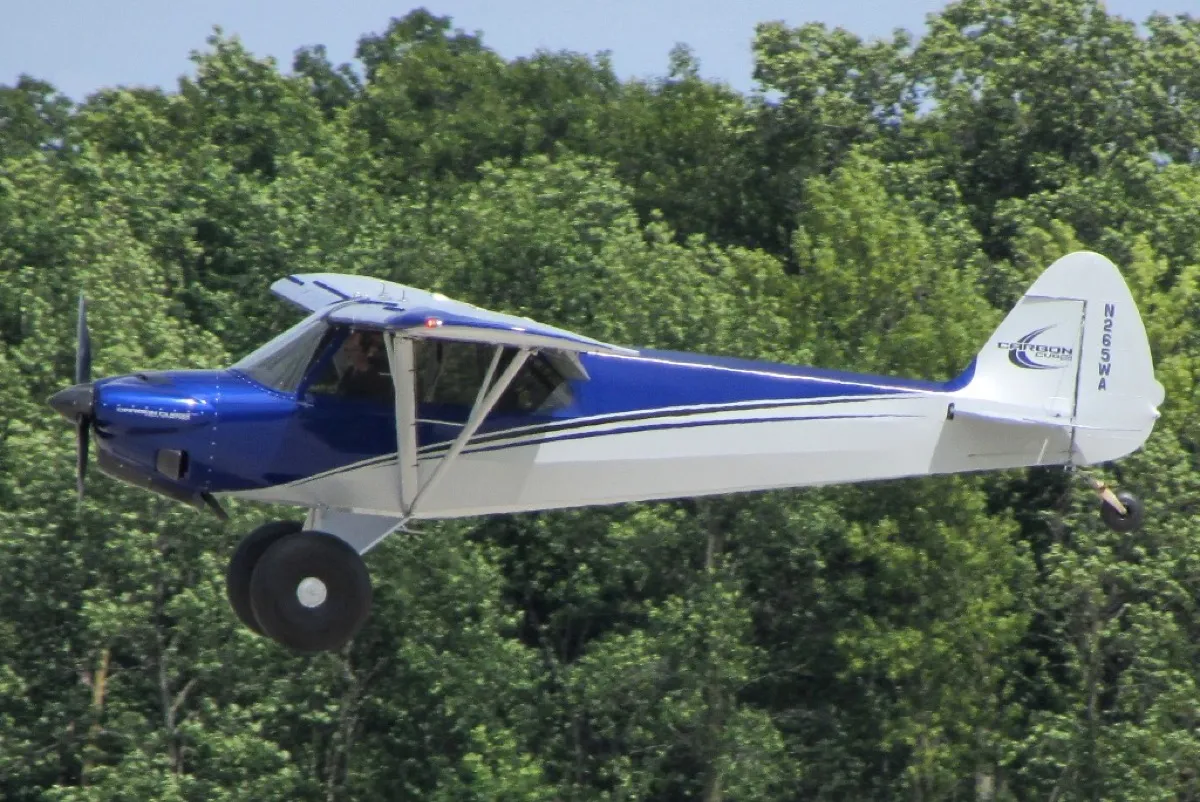
Image: FlugKerl2 via Wikimedia Commons (CC BY-SA 3.0)
CubCrafters Carbon Cub SS
Designation: CC11-160
Why it matters
The Carbon Cub is what happens when someone takes the soul of the J-3 Cub and rebuilds it with modern materials and zero nostalgia tax. CubCrafters in Yakima, Washington, started with the Cub's basic formula (tandem seats, tailwheel, big wing) and re-engineered every piece of it.
Carbon fiber construction. A purpose-built 180-hp engine. Vortex generators. The result takes off in under 100 feet, lands on a gravel bar the size of a tennis court, and makes the whole thing look casual.
Those YouTube videos of Alaska STOL competitions where planes hop off the ground in absurdly short distances? A lot of those are Carbon Cubs. It's the Cub ethos without the Cub compromises.
Specifications
| Max Speed | 145 mph |
|---|---|
| Range | 500 miles |
| Service Ceiling | 18,000 ft |
| Engine | 1x CC340 (CubCrafters-built, based on Lycoming O-340) |
| Power/Thrust | 180 hp |
| Wingspan | 34 ft 7 in |
| Length | 22 ft 9 in |
| Crew | 2 |
| Production | 500+ built (all Carbon Cub variants) |
| First Flight | 2011 |
| Service Dates | 2011-present |
Notable Features
- Carbon fiber construction saves 150+ lbs over aluminum
- Takeoff roll under 100 feet at gross weight
- 29-inch tundra tires standard
- Vortex generators for extreme low-speed control
Patina notes
Carbon Cubs are too new to have real patina, but the ones that live in the backcountry are earning it fast. Tundra tires show the cuts and abrasions of gravel bars and rocky strips.
Wing leading edges carry the evidence of brush contact on narrow approaches. The carbon fiber skin doesn't dent like aluminum, but it picks up scratches and scuffs that tell you this plane goes places.
The cockpit is more modern than a vintage Cub but still deliberately simple. No glass panel, no autopilot. A stick, rudder pedals, and a view.
Preservation reality
The Carbon Cub is a current-production aircraft, so preservation isn't a concern yet. CubCrafters builds them in Yakima with a waitlist that speaks to demand.
The kit-built EX variant lets owner-builders assemble their own for significant savings. The factory-built SS carries full certification. Values hold well because the backcountry flying community is growing and the airplane is genuinely the best at what it does. In twenty years, early-production Carbon Cubs will probably be collector items.
Where to see one
- • CubCrafters factory, Yakima, WA
- • EAA AirVenture Oshkosh
- • Valdez STOL Competition, Alaska
- • Any backcountry airstrip in Idaho or Alaska
- • RAF (Recreational Aviation Foundation) fly-ins
Preservation organizations
- • CubCrafters Owners Group
- • Recreational Aviation Foundation
- • EAA
Sources
- CubCrafters Carbon Cub SS - Wikipedia (2026-03-05)
- CubCrafters Official (2026-03-05)