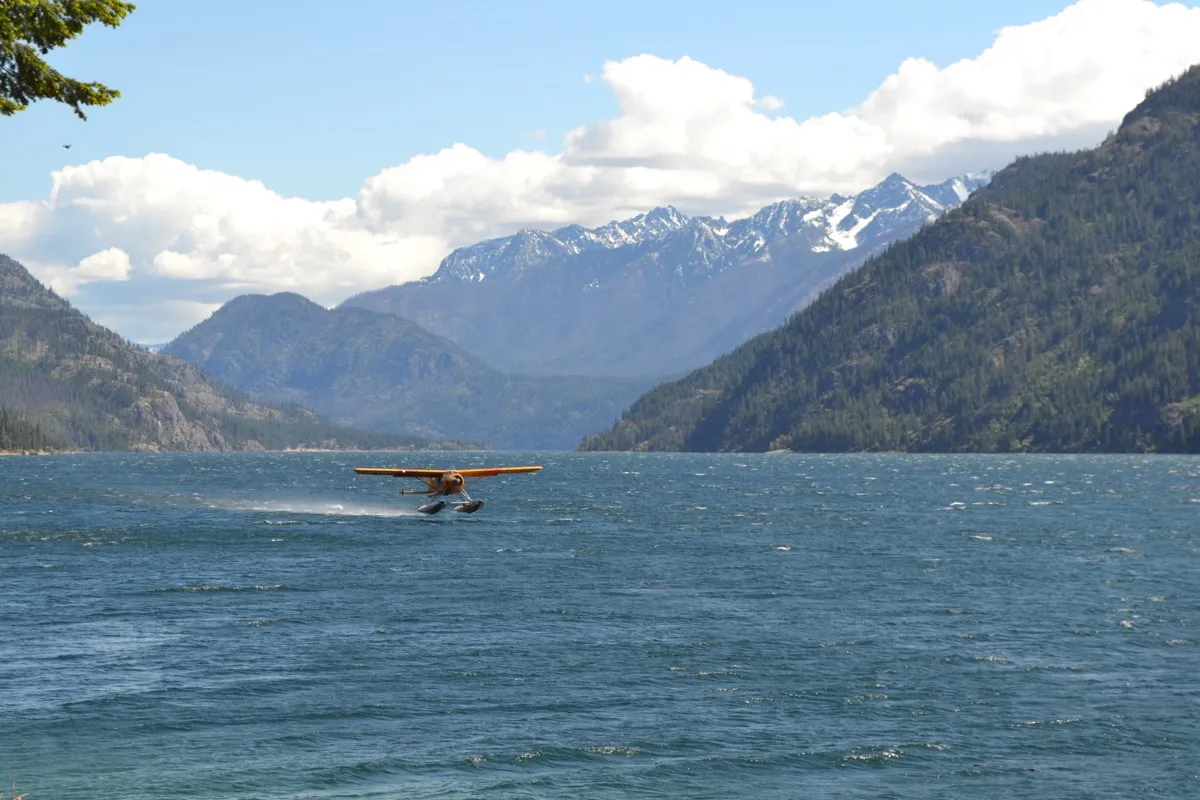
Image: National Park Service via Wikimedia Commons (Public Domain)
de Havilland Canada DHC-2 Beaver
Designation: DHC-2 Mk. I
Why it matters
The Beaver is THE bush plane. Full stop. De Havilland Canada designed it by literally asking bush pilots what they needed: big radial engine for reliability in cold weather, STOL performance for short lakes and gravel bars, enough cabin space to haul people and cargo into places that don't have roads.
The result was so perfectly suited to its mission that Alaska essentially runs on Beavers to this day. Float-equipped Beavers connect communities that would otherwise be completely isolated.
The Canadian engineering society named it one of the top ten Canadian engineering achievements of the 20th century, alongside the Canadarm and the Blackberry. They were right about two out of three.
Specifications
| Max Speed | 158 mph |
|---|---|
| Range | 455 miles |
| Service Ceiling | 18,000 ft |
| Engine | 1x Pratt & Whitney R-985 Wasp Junior radial |
| Power/Thrust | 450 hp |
| Wingspan | 48 ft |
| Length | 30 ft 4 in |
| Crew | 1 |
| Production | 1,657 built |
| First Flight | 1947-08-16 |
| Service Dates | 1948-present |
Notable Features
- STOL capability: takeoff in under 600 feet
- Configurable for floats, skis, wheels, or tundra tires
- Carries 7 passengers or 2,100 lbs cargo
- Named one of Canada's top ten engineering achievements of the 20th century
Patina notes
A working Beaver looks like it belongs wherever it is, whether that's a glacial lake in the Yukon or a gravel strip in the Brooks Range. The fabric-and-aluminum skin carries the evidence of decades of hard landings on rough surfaces.
Float struts show the stress marks of countless water landings in crosswinds. The Wasp Junior radial up front leaks oil with the steady confidence of all radial engines.
The cabin floor is scarred from cargo that was loaded in a hurry because weather was closing in. Every dent is a story about somewhere remote and something urgent.
Preservation reality
The Beaver is in that rare category of vintage aircraft that's actually increasing in value because demand outstrips the surviving fleet. Flyable examples regularly sell for $500,000 to over $1 million, especially on floats.
The type is still essential to bush operations in Alaska and northern Canada, so working examples are maintained to exacting standards. Viking Air acquired the type certificate and briefly produced new-build Beavers.
The community is fiercely loyal, and the annual Beaver roundups at seaplane bases are something to see.
Where to see one
- • Any floatplane dock in Alaska or British Columbia
- • Kenmore Air Harbor, Seattle
- • Canada Aviation and Space Museum, Ottawa
- • Harbour Air, Vancouver (daily scheduled flights)
- • Seaplane bases throughout the Pacific Northwest
Preservation organizations
- • DHC-2.com Beaver community
- • Seaplane Pilots Association
- • Canadian Bushplane Heritage Centre
Sources
- de Havilland Canada DHC-2 Beaver - Wikipedia (2026-03-05)
- Canada Aviation and Space Museum - DHC-2 Beaver (2026-03-05)