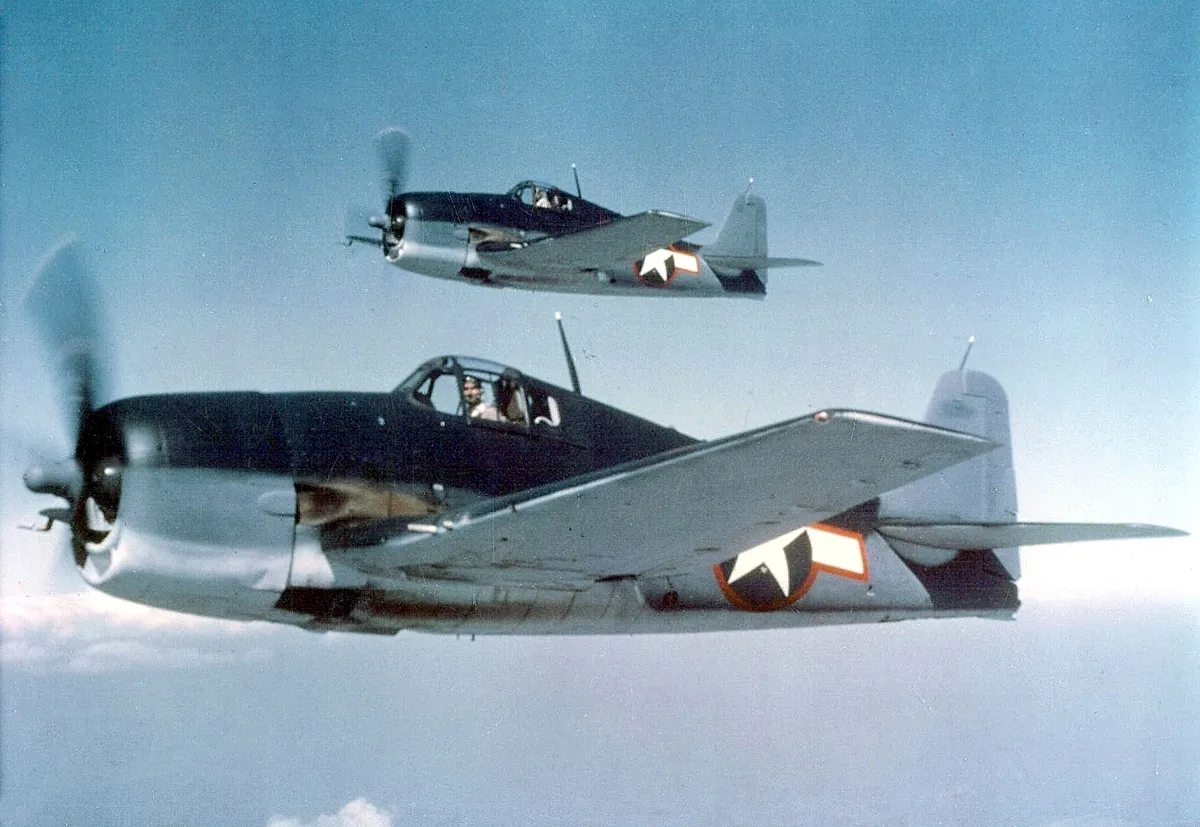
Image: US Navy via Wikimedia Commons (Public Domain)
F6F Hellcat
Designation: F6F-5
Why it matters
The F6F Hellcat was the aircraft that broke Japanese naval aviation. Grumman designed it specifically to counter the Zero — heavier, better armored, with superior performance above 15,000 feet.
Hellcat pilots achieved a 19:1 kill ratio against Japanese aircraft. The Great Marianas Turkey Shoot saw Hellcats down over 350 Japanese aircraft in a single day. The Pacific air war was won by this aircraft.
Specifications
| Max Speed | 380 mph |
|---|---|
| Range | 945 miles |
| Service Ceiling | 37,300 ft |
| Engine | Pratt & Whitney R-2800-10W Double Wasp |
| Power/Thrust | 2,000 hp |
| Wingspan | 42 ft 10 in |
| Length | 33 ft 7 in |
| Crew | 1 |
| Production | 12,275 built |
| First Flight | 1942-06-26 |
| Service Dates | 1943-1954 |
Armament
- • 6x .50 cal M2 Browning machine guns
- • 2x 1,000 lb bombs
- • 6x 5-inch rockets
Notable Features
- Designed specifically to counter the Zero
- 19:1 kill ratio against Japanese aircraft
- Rugged Grumman construction
- Low-mounted cockpit for carrier visibility
Patina notes
Hellcats were built Grumman-tough, and the survivors show the evidence of hard carrier service. The folding wing mechanisms were heavily stressed. The tailhook and landing gear took beatings that left permanent marks.
Salt air corrosion was an ongoing battle. Museum examples often show the distinctive wear patterns of carrier operations.
Preservation reality
About 12 Hellcats remain airworthy, with more in museums. The type is rare compared to its production numbers because carrier aircraft led hard lives.
Many were pushed overboard to make room for newer types. Parts availability is challenging, and R-2800 engine cores are increasingly scarce.
Where to see one
- • National Naval Aviation Museum
- • National Air and Space Museum
- • Planes of Fame Air Museum
- • Yankee Air Museum
Preservation organizations
- • Commemorative Air Force
- • Warbird Heritage Foundation
Sources
- National Naval Aviation Museum (2026-02-03)