Image: U.S. Navy via Wikimedia Commons (Public Domain)
Martin JRM Mars
Designation: JRM-3
Why it matters
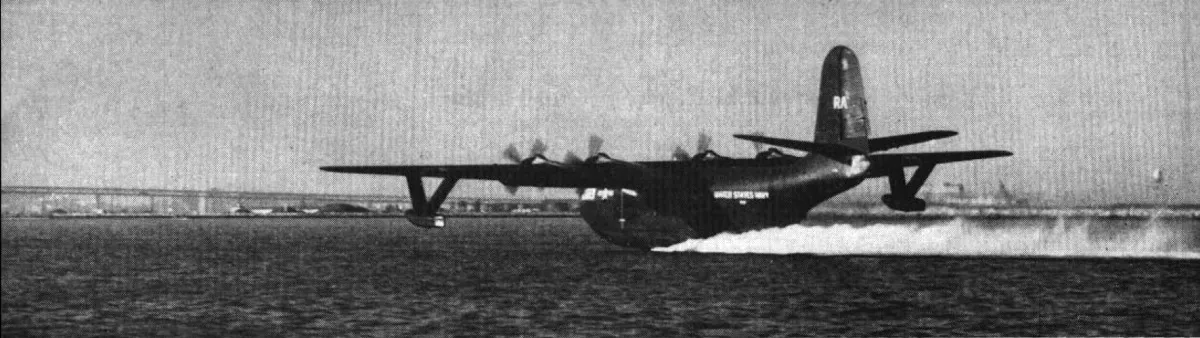
Only seven were ever built, which makes the Martin Mars one of the rarest aircraft types that ever flew operationally. The Navy wanted a long-range patrol bomber and got a monster: 200-foot wingspan, four massive radial engines, and a hull the size of a small apartment building.
But the Mars found its true calling after the war. Converted to water bombers, two of them spent over fifty years fighting forest fires in British Columbia, each scooping 7,200 gallons from a lake in 22 seconds and dropping it on burning timber.
When you watch footage of a Mars making a water drop, the scale is hard to process. It's a building with wings, and it's skimming a lake.
Specifications
| Max Speed | 221 mph |
|---|---|
| Range | 4,945 miles |
| Service Ceiling | 14,600 ft |
| Engine | 4x Wright R-3350-24WA Duplex-Cyclone radials |
| Power/Thrust | 2,500 hp each |
| Wingspan | 200 ft |
| Length | 117 ft 3 in |
| Crew | 11 |
| Production | 7 built |
| First Flight | 1941-11-03 |
| Service Dates | 1943-2015 |
Notable Features
- Largest allied flying boat of WWII
- 7,200-gallon water drop capacity as firefighter
- 200-foot wingspan
- Operated as water bombers in British Columbia for over 50 years
Patina notes
The surviving Mars airframes show the wear of machines that worked impossibly hard for decades. The hull plating carries the evidence of thousands of water landings and takeoffs.
The paint, in that distinctive red-and-white firefighting livery, is faded and chalked from years of sun and salt. Cockpit windows are scratched from flying through smoke. These machines didn't age gracefully. They aged honestly.
Preservation reality
Of the seven built, only two survived to the 21st century: Hawaii Mars and Philippine Mars. They flew their last firefighting missions in 2015 when Coulson Aviation retired the type.
Hawaii Mars is preserved at the British Columbia Aviation Museum and occasionally appears at events. Philippine Mars was reportedly scrapped. Seeing one in person is a pilgrimage, not a casual museum visit. The scale alone is worth the trip.
Where to see one
- • British Columbia Aviation Museum (Hawaii Mars)
- • Coulson Aviation, Port Alberni, BC (historical site)
- • Sproat Lake, BC (former operating base)
Preservation organizations
- • Martin Mars Water Bombers Society
- • British Columbia Aviation Museum
Sources
- Martin JRM Mars - Wikipedia (2026-03-05)
- Coulson Aviation - Mars Water Bombers (2026-03-05)